From Agency to Agent: Rebuilding the InReach Brand
We once hired a brand agency to name and position InReach. This time I rebuilt the whole brand, guidelines, style guide, logos, website and decks, by running the same process with an AI agent.
When we started InReach, we did the conventional thing and hired a brand agency.
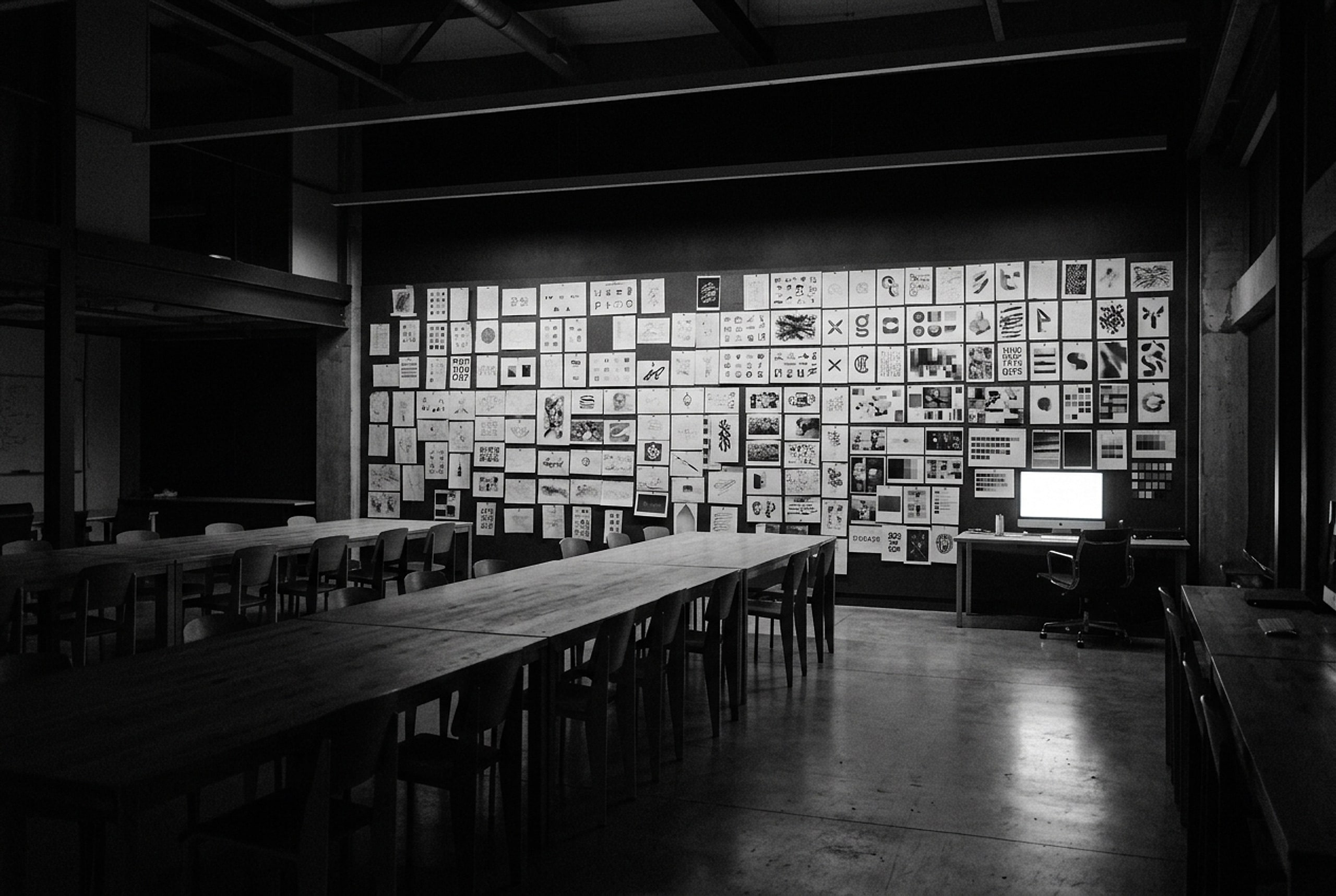
They were based at H-Farm, a startup campus outside Venice, and that is where the workshops happened. Over a week together (and many apart) they ran a proper brand project: a scoping brief, a debrief workshop with the founding team, a benchmark of how other VC firms presented themselves, persona research on the founders we wanted to reach, a positioning framework, and a naming exercise. It was real craft, done by people who knew what they were doing.
The naming exercise alone weighed fourteen names against domain availability and fit with the positioning. If you can keep a secret and hold your judgement - among them were: Hark, Empation, Trustive, Founders First, Heed and Earshot. The one that won was InReach: “inside the distance to which someone can stretch out their hand.” That name is still on the door, which is worth something.
What an agency actually does
Underneath the creative reputation, what you buy from a brand agency is a process: brief, debrief, benchmark, audience, positioning, naming, identity. Each step is its own discipline, and each one produces an artefact, a positioning document, a set of name options, a logo, a guidelines document, a keynote template.
Running that process took weeks of work, and the durable part was the thinking. The name stuck, and so did the work behind it: the sessions on what we valued and who we were for grounded the firm and are still our core company values. The rest had a half life. The tagline went, the three pillars went, the target-founder persona aged out, and the guidelines and templates became a stack of well-produced PDFs that lived on a drive and, after a while, stopped getting opened.
The same process, a different operator
The brand had gone stale. The positioning had not. If anything it is more accurate now than ever, that DIG sources the majority of our investments in startups all over Europe. It was the expression that had aged. The audit was blunter about it than I would have been: the green carried a “mid-2010s eco-tech feel”, the site was “clean but forgettable”, one of a “sea of white-background VC sites”, and the logo, the colour and the voice had never been written down in a form anyone could pick up and use.
The obvious move was to hire another agency. Instead I ran the same process in the open, with Claude Code, inside our website’s git repository. The setting was a good deal less glamorous than the rolling countryside outside Venice: an office chair and a terminal. But the brand work and the code that expresses it sat side by side, so every session started with full context and every decision was recorded as we made it. We went through the steps an agency would, benchmarking, writing the positioning, drafting and pressure-testing the messaging, and then we built.
What came out is the deliverable set an agency produces, and then some:
- A positioning and messaging framework, with the lines we use and the lines we have banned.
- A tone of voice, written down properly, with before-and-after examples so anyone can write in it.
- Audience work for the people we actually talk to: founders, LPs, and other investors.
- A full style guide: colour, typography, photography direction, and logo usage rules.
- New logos and wordmark lockups, rendered from source so they regenerate cleanly at any size, plus the icon set the product and the site share.
- A rebuilt website and new inbound. No more forms - just send send us what you’ve got and our agent will apply the structure.
- A set of slide decks rebuilt on the new brand, generated from the same design tokens as the site, so the deck and the website cannot drift apart.
We also built a communications strategy and a working content pipeline, so the brand keeps producing after the project ends.
How it was different
The agency handed us PDFs. The agent left us a working system, and that difference matters more than the speed or the cost, though it was both faster and far cheaper.
The logos are not exported images in a folder; they are source files that re-render at any size. The voice is written down in a document that the next person, or the next agent, reads before writing a word. The colours are tokens that the website and the decks both import, so they cannot quietly drift apart. Every choice we made, along with every alternative we rejected and the reason why, sits in a decision log in the repository. Because all of it lives with the code, the context does not leave when the engagement does.
What the agent could not do
I should be careful not to oversell this.
It was not push-button. The judgment, the taste and the decisions were ours. The agent is leverage, not a replacement for knowing what good looks like. At one point Claude proposed “Built to find you” as a tagline - it was pointed out how creepy that sounds. That is the texture of the whole project: the agent generates, the people decide.
What the agent genuinely changes is the cost of trying. You can explore ten directions in the time it used to take to brief one, hold the whole brand in context at once so it stays consistent, and move from a positioning decision to a working website in the same week. The bottleneck stops being production and moves back to judgment, which is where it belongs.
Why I am writing this down
Roberto wrote recently that the next venture firm will be small, partner-led, and powered by agents rather than headcount. I argued, in the post before this one, that those agents are only as good as the platform underneath them. It is the same argument, pointed at our own brand. What once needed an agency you can now do with an agent, as long as you know what your version of good looks like.
The name and the core company values remain. Almost everything around them has been rebuilt, not just as a set of artefacts but as something that is still running.